We are now almost at the bottom of the world, or at least as close as we will come without joining a polar expedition! And Patagonia is as remote and incredible as it sounds. We are here mainly to see the Torres del Paine National Park and Penguins (real ones this time, not the wine carrying ones)! And it is backpacker territory here, so with our packs and walking shoes we fit right in!
 After a tiring day of 3 flights to get here we were taken by a taxi tout into the port town of Punta Arenas. Cameron was not happy as he was convinced that we were in an unlicensed taxi (probably true) and were going to be mugged (hopefully not). After a thankfully uneventful trip Ben & I have realised that the first 2 days in a new place unsettles the boys the most and it’s when they are at their most challenging. It is hard to be in a new place and have to re-learn stuff each time. It helped that Ben had booked us into a really lovely cabanas (lodge) in the garden of a charming local family (Cabañas Ariskaiken) He was the local CSI for the police force and she was the cabanas manager. They also had a pet sheep in the garden that made Ollie a very happy camper until it head butted him in the bottom – quite hard – to show it liked him! He kept his distance after that. We also dined in posh restaurant tonight – a bit by accident.
 For this part of Chile we’ve got a hire car, an estate, as the distances are huge, and it would give us greater flexibility but in hindsight should have gone for a 4wd, as many of the roads are just dirt and gravel. Hire car companies are not as fussy here; ours came with a cracked windscreen and a strange rattle that Ben impressively fixed with a wrench!


Fort Bulnes in the Summer.
We drove down the coast following the Magellan Strait to Fort Bulnes & Fort Famine, the place of the first colonies by the Spanish in Chile. After Magellan’s discovery of a quicker and much safer passage between the Pacific and Atlantic Oceans (and the first circumnavigation of he world) the Spanish realised they should settle the area before the British did! As you can guess from the name Fort Famine wasn’t a great success, but Bulnes Fort finally moved north, was renamed Punta Arenas, and became an important shipping hub en-route to Asia and eventually for exploration of the Antarctic. (This history lesson is courtesy of the child-friendly Naval Museum!)  Not only is the history fascinating but the scenery out of town was also stunning, both Ben and I had no idea it was so beautiful, both rugged and pretty at the same time, with blue water coves, green pastures with wildflowers and areas of forest. But did we mention the wind? Not entirely surprisingly it is very WINDY here. The Magellan Strait is also littered with old wrecks and some more recent ones which makes for a interesting drive.


The Victoria

To learn more about Magellan and his explorations we visited a replica of his ship The Victoria, the only one to survive the voyage. This is history in action as the shape and height of the ship was incredible to see and inside you could almost imagine the hardships of the voyage, over 37000 miles, and 232 dead crew (including Magellan himself in the Philippines).
The same museum also had a copy of The James Caird, Shackleton’s lifeboat in which he sailed to save himself and his crew during their Antarctic Exploration, and are currently building a copy of The Beagle, Charles Darwin’s ship of exploration. All my boys really enjoyed this, especially Ben, as Shackleton is one of his heroes.

We had our own less adventurous boat trip booked to Isla Magdalena to see the Magellan Penguin colony but it was cancelled due to the ferocious winds, so we instead braved the winds ourselves the next day to drive 40 miles on mostly gravel roads to the Otway Sound to see the smaller penguin colony that lives on a remote beach. They had a great wooden viewing platform, with wind-breaks, to get really close views of the little fellas! Very cute watching them waddle around on the beach and play in the freezing cold ocean, the boys loved it.


Next is a 3.5hr drive to Puerto Natales on the West coast to visit the famous Torres de Paine National Park. Ben can’t wait.

Fresh (?) fish for dinner – maybe not.

Even at the end of the world I can still do my weekly Waitrose Shop!


 acular for a wider overall view (you get a 260 degree lookout of falls from some points) and you get quite wet from the spray on the observation points, plus a very beautiful rainbow. Wet was order of the day in a Zodiac boat trip to experience the falls close up, and driving us under the waterfalls certainly did that. The power of the water was furious and a little bit cold but we were screaming with both laughter and a little fear!


 is a pretty colonial town of brightly coloured doorways and cobbled streets. It is obviously a popular tourist destination for Brazilians from Sao Paolo and Rio as the shops are boutique and well stocked with souvenirs, and many restaurants have menus in English, which is a little less fun than ordering ‘carne’ and wondering what kind of meat will arrive! The boys both had a cartoon drawn of themselves by a local street artist and we’ve bought some Brazilian flag sarongs to use on the beach as they dry so quick (as no one seems to use beach towels.). Street vendors also sell churro’s here, thank goodness, but they also make fresh cocktails to go, so Ben & I are sorted too!


 Adele – Our tour of Rio day started off with Ollie having a high temperature during the night with 1 of us cooling him down with wet towels and the other frantically “googling” the symptoms of malaria and the location of the nearest hospital in Rio at 2am.
 Oliver – Cristo Redentor or Christ the Redeemer is the giant statue of Christ that stands over Rio protecting the city since 1932. We went up there in small buses as it is at the top of Corcovada Mountain in the national park. The statue, made of soapstone, is over 40 meters tall, including the podium and can be seen from most of Rio and at night there are lights shining on it too which makes it even prettier. I felt like it was looking after me so I bought a little copy of the statue to keep me safe while I am travelling.


 On a more serious note, we learned more about the infamous Favelas and how 3 million people in Rio live in these neighbourhoods (there are 700 favelas in the City). Perhaps like most people, our perception of these areas was that they are squalid, lawless slums rife with violence and drugs. With Ederson’s insights we now have a more balanced view and realise that the vast majority of the people living in favelas are ordinary, law abiding people trying to make ends meet. There’s no doubt though that drug trafficking is a problem that leads to a high crime rate, which the authorities are tackling with some pretty tough policies. The World Cup and up-coming Olympics in 2016 seem to have given a strong impetus to “clean up” the City’s image.


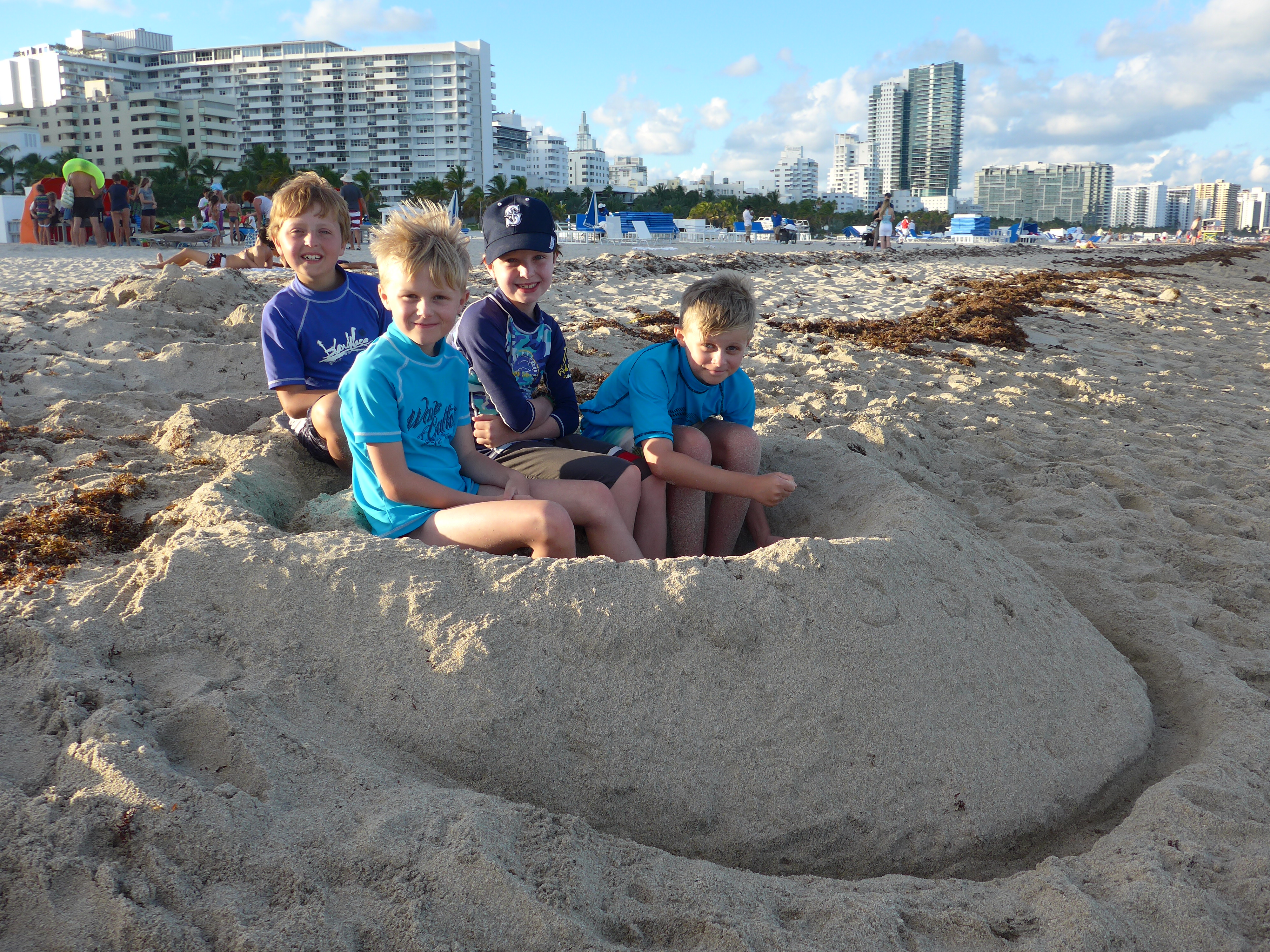
 a kitsch-y, vibrant and fun place. The ‘Art Deco District’ is the area of the iconic hotels but also the place to be seen. Fancy cars of all types cruise Ocean Drive, music blaring and riders posing. The restaurants are noisy and the margaritas are neon and hangover-sized.

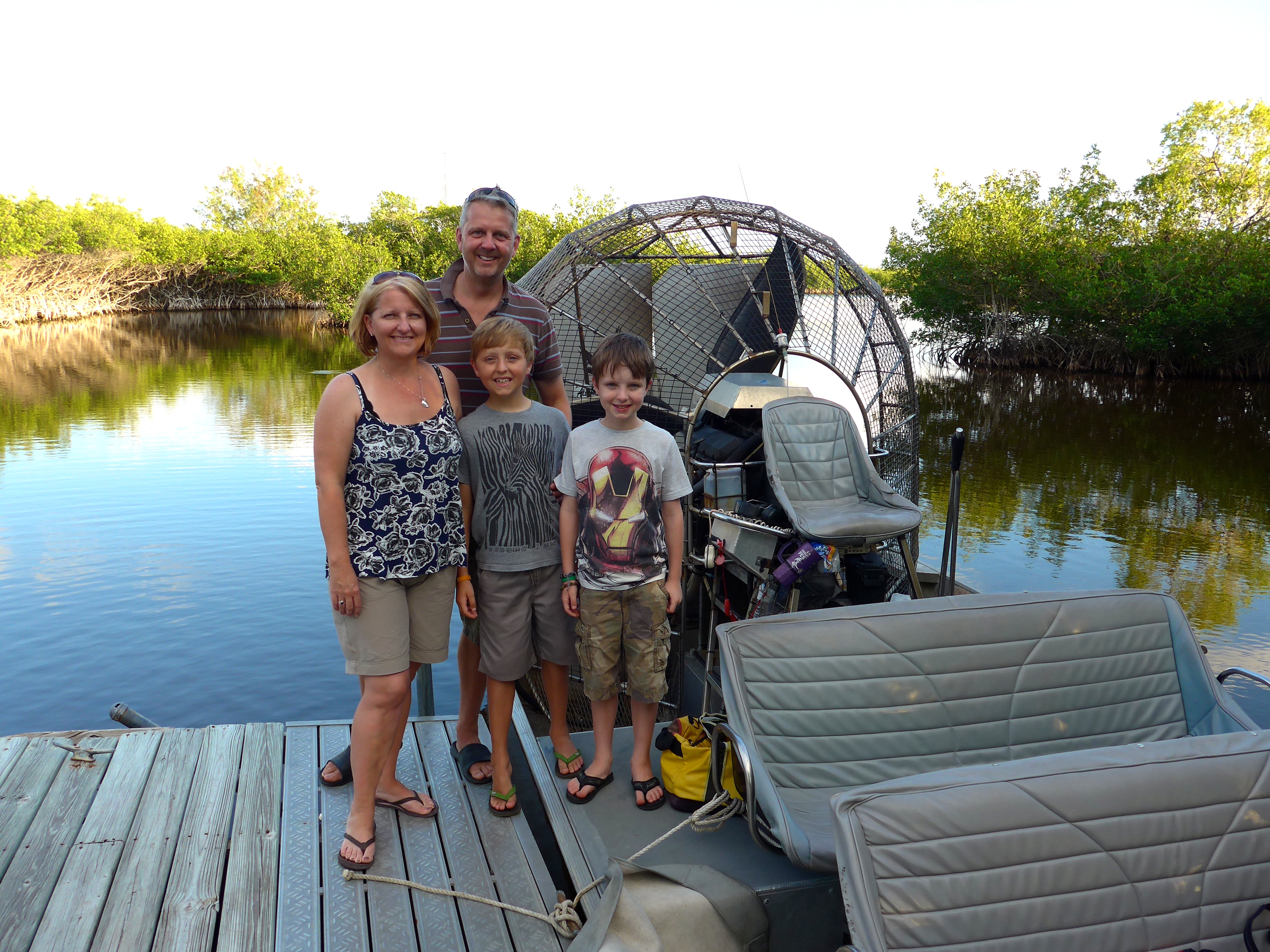
 Before we left we went ‘Gator hunting in Everglades on an airboat tour and watched them swimming amongst the mangroves, from large adult males of 12ft to smaller 4-5ft juvenille’s who were very inquisitive and swam up next to the boat. Cameron loved the airboat, particularly when our driver did a high speed 180! Ollie is now considering becoming a Park Ranger here in the Everglades instead.